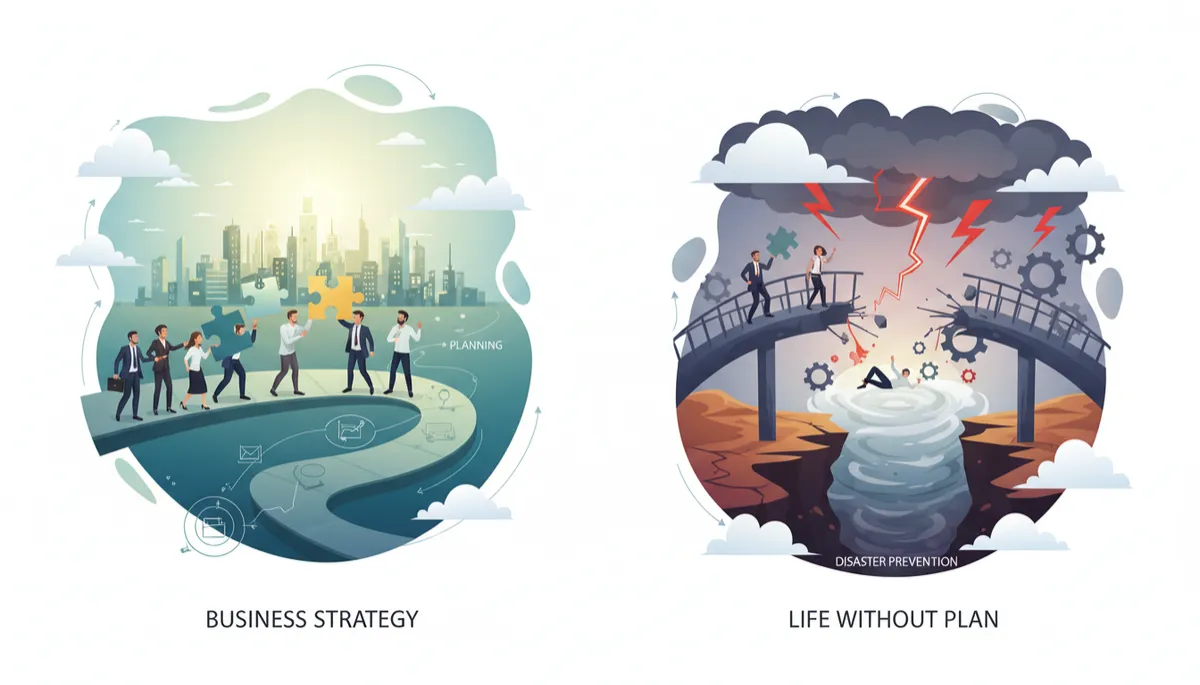
Avoid Business Failure: Plan Strategically
Planning, Business Strategy, Disaster Prevention
What Happens When You Have No Plan: How “We’ll Cross That Bridge” Thinking Destroys Businesses
In life, in work, in school, and especially in business, a “we’ll cross that bridge when we get to it” mindset feels flexible and low-stress—until the bridge is on fire. For established small business owners, a lack of clear Planning and Business Strategy is not just an inconvenience; it is a direct threat to profit, capacity, and long-term wealth.
Life Without a Plan: What It Really Costs You in Business and Beyond
Most owners didn’t start their companies with a 50-page strategic document. They started with grit, talent, and the willingness to do whatever it took. That works—for a while. But working without a plan eventually shows up as missed opportunities, constant firefighting, and a business that cannot run without the owner in the building every hour of the day.
When there is no clear direction, you live in reaction mode. You respond to whoever is yelling the loudest, to whichever bill is due first, to whichever staff member just quit. Over time, that reactive posture erodes confidence in both the staff and owner, profit, and capacity. For a business, it can be the difference between a thriving, transferable asset and an exhausting job you happen to own.
What Happens to a Business with No Plan
A “no plan” or “we’ll figure it out later” mentality slowly pulls a business from great to disaster. It rarely looks like a single dramatic event. Instead, it shows up in a series of small, compounding issues that quietly drain profit and energy. Here is what typically happens when Planning and Business Strategy are missing or vague:
Constant firefighting replaces focused execution. Every day becomes an emergency. Staff wait for you to decide. Clients dictate your schedule. You spend more time putting out fires than building anything lasting.
Profit leaks go unnoticed. Without clear Work Goals and financial targets, you accept “busy” as a substitute for “profitable.” Low-margin services linger. Inefficient processes remain untouched because there is no roadmap for improvement.
Owner dependency increases. When there is no documented plan, it lives in your head. That makes you the bottleneck. Staff can’t make decisions confidently, and you can’t step away without worrying everything will fall apart.
Opportunities pass you by. A competitor launches a new offer, hires key talent, or enters your neighborhood. You think, “We should do something like that,” but without a plan, it becomes another idea that never turns into action.
Stress rises, leadership weakens. Teams sense when leaders are reacting instead of steering. Morale drops. Turnover rises. The culture shifts from proactive to defensive, and growth stalls.
In other words, disaster prevention in business is not just about insurance policies and backup servers. It is about deliberately replacing chaos with clarity. Without that clarity, even a strong business can slide into operational chaos, shrinking margins, and eventual burnout for the owner and leadership team.
📌 Key Takeaway: A business without a plan does not stay “as is” for long—it slowly shifts from opportunity-driven to problem-driven, and the shift usually goes unnoticed until it hurts.
Why a Well Thought Out Plan Matters More Than Hustle
At Cardinal Business Advisors, we see the same pattern across service-based, restaurant, hospitality, family-owned, and professional businesses: the owner is not short on effort. They are short on aligned, intentional Planning. Hustle without a plan burns energy; hustle with a plan builds wealth and freedom.
A plan turns vision into decisions. You may know you want more profit, less chaos, and more freedom. A well thought out Business Strategy translates that into concrete Work Goals—what to sell, to whom, at what margin, with which systems and people in place.
A plan creates accountability. When priorities, numbers, and timelines are clear, your team can own outcomes. You move from “Did we survive the week?” to “Did we move the right metrics this week?”
A plan protects profit. Disaster prevention is not just about avoiding worst-case scenarios; it is about defending healthy margins. A plan tells you which services to grow, which to fix, and which to retire so your business can Profit on Purpose™—not by accident.
A plan reduces owner dependency. When strategy, processes, and expectations are documented, your business becomes less about your constant presence and more about systems and leadership. That is how you create real owner freedom and lasting Business Wealth™.
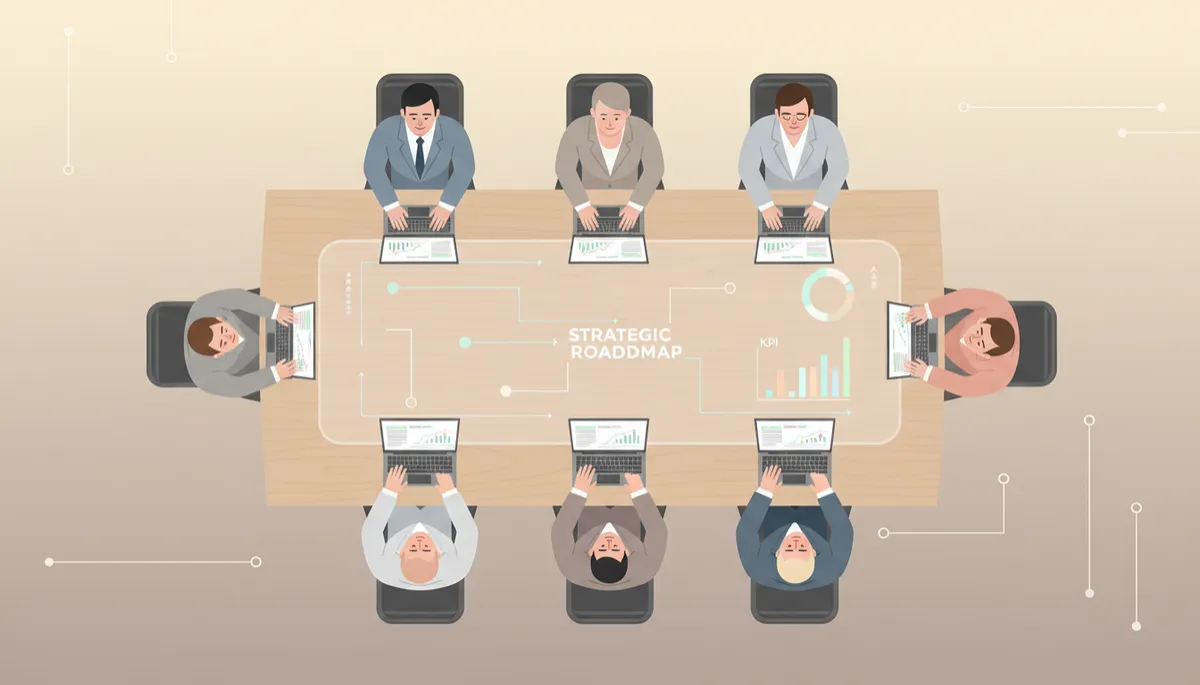
A clear roadmap aligns people, profit, and priorities around measurable outcomes.
From “We’ll Cross That Bridge” to “We Already Built It”
The “we’ll cross that bridge when we get to it” mentality sounds flexible, but in business it usually means, “We will deal with the problem only after it is expensive.” Planning is not about predicting every detail of the future. It is about building bridges before you need them, so your business can move quickly and confidently when circumstances change.
1. Clarify Your Non-Negotiables
Start by defining what cannot be compromised in your business: minimum profit margins, service standards, staffing levels, cash reserves, and owner work hours. These become anchors for your Business Strategy and Disaster Prevention efforts. When opportunities or crises arise, you evaluate them against these non-negotiables instead of reacting emotionally in the moment.
2. Set Focused Work Goals, Not Just Revenue Targets
Revenue is important, but it is not enough. Effective Planning sets Work Goals around:
Profit per service line or menu category
Labor efficiency and scheduling standards
Customer experience metrics (retention, reviews, referrals)
Systemization and automation milestones that reduce owner dependency
These targets give your team concrete direction and make it possible to measure whether your Life Without Plan is turning into a business with purpose, structure, and momentum.
3. Build Simple, Repeatable Systems
A plan without systems is just a wish list. To prevent chaos from creeping back in, document how you:
Attract, qualify, and onboard ideal clients or guests
Deliver consistent, high-quality service every time, even on your busiest days
Monitor key numbers weekly so problems are caught early, not once a quarter
Develop and hold leaders accountable, so you are not the only one enforcing standards
💡 Pro Tip: If a process is repeated more than three times a week, it deserves a simple written or digital system. That is how Planning becomes daily behavior, not just an annual exercise.
4. Run “What If” Scenarios Before Reality Forces Them
Disaster prevention in business is often about asking better questions ahead of time:
What if our top client left or our busiest season dipped by 20%?
What if a key manager resigned unexpectedly?
What if our landlord raised rent or a major vendor changed terms?
When you walk through these scenarios in advance and tie them to your Business Strategy, you can create backup plans, cross-training, cash reserves, and alternative offers. Then, if the bridge appears, you have already built the path across it.
How to Keep Lack of Planning from Destroying Your Business
You do not need a corporate-sized planning department to protect and grow your business. You need a practical, owner-friendly approach that fits real-world constraints. Here are concrete steps to keep a Life Without Plan from quietly undermining everything you have built:
Diagnose where you are now. Use tools, advisors, or internal reviews to assess profit leaks, operational bottlenecks, and owner dependency. At Cardinal Business Advisors, we call this Business Wealth™ diagnostics—seeing clearly where your business is strong and where it is silently at risk.
Choose 3–5 critical priorities. Planning fails when it tries to fix everything at once. Instead, focus on a handful of priorities that will protect profit and reduce chaos: pricing, labor, key systems, or leadership development.
Translate strategy into weekly actions. For each priority, define specific weekly actions and owners. This is where Work Goals become behavior—who does what, by when, and how it will be measured.
Review and adjust regularly. Planning is not a one-time retreat. Set a monthly or quarterly rhythm to review results, refine your Business Strategy, and re-align your team. This rhythm is what keeps “we’ll get to it later” from creeping back into your culture.
Your Next Step: Move from Reaction to Intentional Profit
You built your business with courage and hard work. The next chapter requires something different: intentional Planning that protects your profit, your team, and your freedom. A Life Without Plan might feel flexible, but in business it is simply expensive. The good news is that you can change that trajectory faster than you might think, once you have the right strategy, structure, and support.
At Cardinal Business Advisors, we specialize in helping established small business owners turn hard work and revenue into greater profit, stronger operations, less owner dependency, and lasting Business Wealth™. If you are ready to stop crossing burning bridges and start building them on purpose, it is time to get clear on where your business is losing profit, capacity, and opportunity—and what to do about it.
📌 Call to Action: Book a Profit GPS Call™ to uncover the gaps in your current Planning and Business Strategy, identify your top priorities, and chart a practical route to a business that truly pays you back—in profit, freedom, and long-term wealth.


